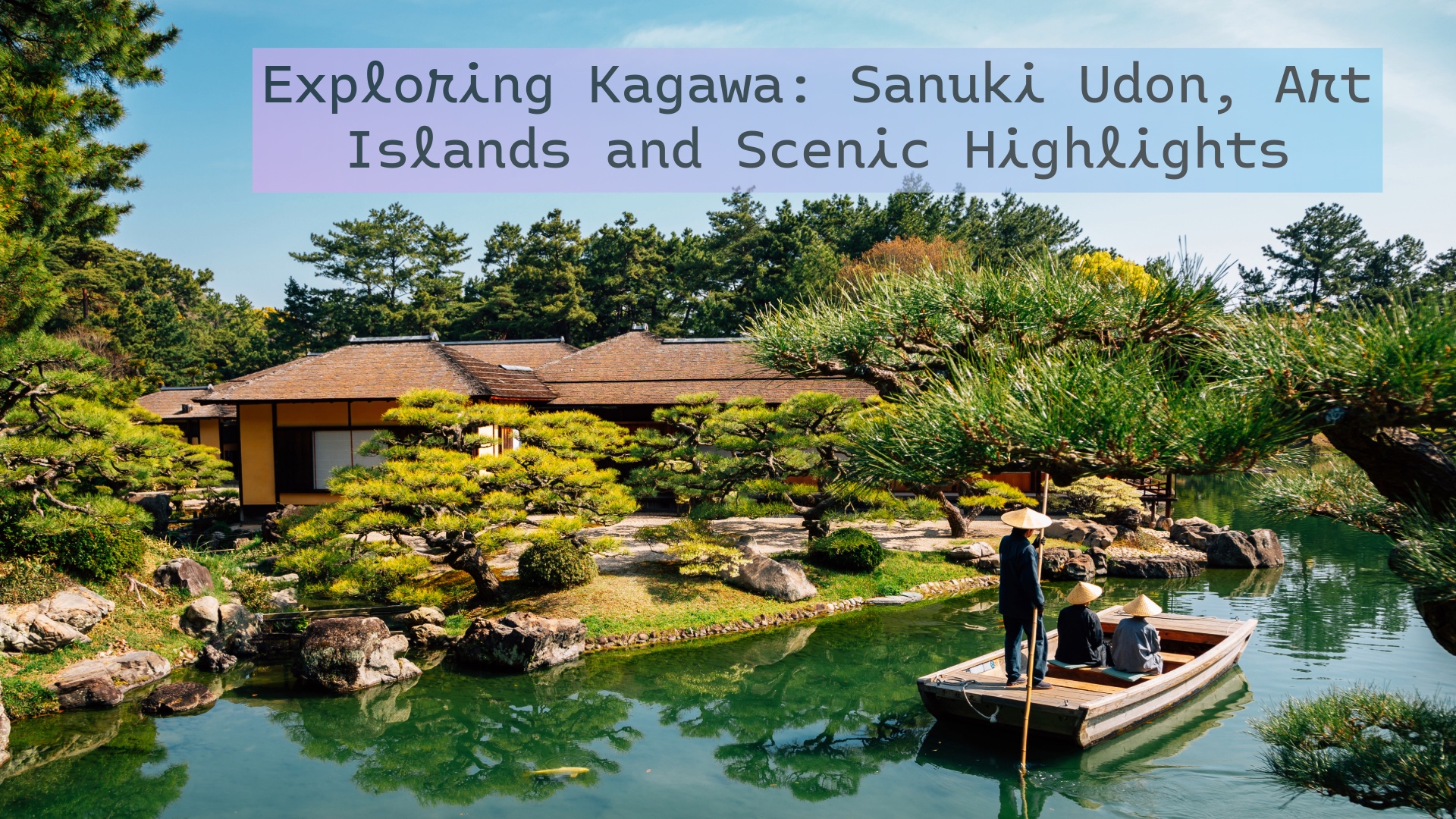
Located on Japan’s smallest main island of Shikoku, Kagawa Prefecture may be the smallest prefecture by area, but it offers a surprisingly rich mix of food, culture, and scenery.
Often referred to as “Udon Prefecture”, Kagawa is best known for its Sanuki udon. But beyond its famous noodles, you’ll find traditional gardens, historic shrines, coastal views, and easy access to some of Japan’s most famous art islands.
This guide covers everything you need to know, from transport and food to the best places to visit in Kagawa.
In This Post
How to Get to Kagawa (Takamatsu Access Guide)
The main gateway to Kagawa is Takamatsu, which is well connected to the rest of Japan.
By Train (Best Option)
From Osaka or Okayama, take the JR Marine Liner across the Seto Ohashi Bridge.
- Okayama → Takamatsu: around 1 hour
- Osaka → Takamatsu: around 2.5 to 3 hours
By Air
Takamatsu Airport connects Kagawa with major domestic cities such as Tokyo and Fukuoka, along with some international routes depending on the season.
A limousine bus connects the airport to Takamatsu Station in about 40 minutes.
Klook.comBy Ferry
Takamatsu is a major ferry hub in the Seto Inland Sea, with connections to:
- Naoshima
- Shodoshima
- Kobe
By Car
Driving via the Seto-Chuo Expressway across the Seto Ohashi Bridge is a good option if you plan to explore more rural areas.
Sanuki Udon: Kagawa’s Signature Food
Kagawa is famous across Japan for Sanuki udon, known for its firm texture and chewy bite.
The ingredients are simple—wheat flour, salt, and water—but the preparation and technique make all the difference. Many udon shops are casual and operate on a self-service style.


There are a bunch of restaurants located right in front of the station. We ate at Merikenya (see photos above) which has good reviews on Google, but most of the udon shops around the station do.
Things to Do in Takamatsu
As the capital of Kagawa, Takamatsu is compact and easy to explore.
Ritsurin Garden
Ritsurin Garden is widely regarded as one of Japan’s finest traditional landscape gardens and is a highlight of any visit to Kagawa.
Originally developed during the Edo period by local feudal lords, the garden was designed as a strolling garden, meaning it’s best experienced by walking its carefully planned paths. As you move through the grounds, the scenery changes subtly, with views framed by ponds, small bridges, and meticulously maintained pine trees.

One of the defining features of Ritsurin Garden is how it incorporates the surrounding mountains as a natural backdrop, creating a sense of depth and scale that feels much larger than the garden itself.
There are several points of interest throughout the garden, including small pavilions, traditional bridges, and seasonal landscapes that change throughout the year. In spring, cherry blossoms add soft colour, while autumn brings vibrant foliage.
A visit to the Kikugetsu-tei teahouse is highly recommended. Here, you can sit by the water and enjoy matcha and a traditional sweet while taking in one of the garden’s most scenic views.
Time needed: 1–1.5 hours
Best for: Traditional Japanese scenery, photography, and a relaxed walk
Takamatsu Castle (Tamamo Park)
Takamatsu Castle, located within Tamamo Park, is one of Japan’s few remaining “water castles”, known for its unique seawater moats.
Unlike most castles, which use freshwater moats, Takamatsu Castle was built directly along the coast, allowing seawater to flow into its defensive system. This gives the site a distinct character and reflects its strategic importance during the Edo period.
Although the original main keep no longer stands, much of the stonework, gates, and layout remain, giving visitors a good sense of how the castle once functioned. Walking through the grounds, you’ll see reconstructed turrets, bridges, and wide open spaces where the main structures once stood.
One interesting detail is that fish can still be seen swimming in the moats, reinforcing the connection to the sea.
The park itself is well maintained and easy to explore, making it a pleasant stop, especially when combined with a walk around the nearby harbour area.
Time needed: 45–60 minutes
Best for: History, unique castle design, and a short, easy walk
Shopping Arcades

Takamatsu Marugamemachi Shopping Street and nearby arcades form one of the longest covered shopping streets in Japan. It’s located near a host of Udon shops, cafes and an easy walk from the castle
For the Kids
Located near the main shopping street is the Sanuki Toy Museum, a great spot for families. There are plenty of wooden toys housed in a beautiful environment for the kids to enjoy. There is a cafe and shop as well.


Beyond Takamatsu: Best Places to Visit in Kagawa
While Takamatsu is a great base, some of Kagawa’s most memorable experiences are found just outside the city. These destinations are all accessible as day trips and add real depth to your visit.
Kotohira and Konpira-san Shrine
Kotohira is home to Kotohira-gu Shrine, commonly known as Konpira-san. It is one of Japan’s most important shrines, historically associated with sailors and maritime safety.
To reach the main shrine, visitors must climb 785 stone steps, with an optional continuation to the inner shrine at over 1,300 steps. The climb is steady rather than steep, and there are plenty of places to stop along the way.
The approach to the shrine is part of the experience. You’ll pass traditional shops selling local sweets, souvenirs, and drinks, giving the area a nostalgic feel. At the top, you’re rewarded with wide views over the Sanuki Plain.
Time needed: 2–3 hours
Best for: Culture, views, and a bit of light hiking
Naoshima: Japan’s Art Island
Naoshima is one of Japan’s most well-known contemporary art destinations, attracting visitors from around the world.
The island blends art with nature in a way that feels intentional rather than overwhelming. Museums are designed to work with the landscape, and many installations are outdoors.

Key highlights include:
- Chichu Art Museum — built mostly underground, using natural light to illuminate works by artists such as Monet
- Benesse House Museum — part museum, part hotel, with art displayed both inside and along the coastline
You’ll also find smaller galleries, art houses, and installations scattered across the island, including the well-known pumpkin sculptures by the sea.
Time needed: Half day to full day
Best for: Art, architecture, and something different from typical sightseeing
Shodoshima: Olive Island
Shodoshima offers a slower, more relaxed atmosphere compared to Naoshima. Known for its olive cultivation, the island has a slightly Mediterranean feel, which is unusual in Japan.
One of the most popular spots is Olive Park, where you’ll find groves, sea views, and a windmill overlooking the coast. Another highlight is Angel Road, a sandbar that appears at low tide and connects small islands, allowing visitors to walk across.

Shodoshima is also known for traditional soy sauce production, with several breweries open to visitors.
The island is spread out, so renting a car or using local buses is recommended if you want to explore more than one area.
Time needed: Full day (or overnight if possible)
Best for: Scenery, slow travel, and island atmosphere
Marugame Castle
Marugame Castle is one of only a handful of castles in Japan with an original wooden keep still intact.
The castle is set on a hill and is known for its impressive stone walls, some of the steepest in Japan. The walk to the top is short but includes a steady incline.
Inside the keep, the structure is simple but authentic, and the top floor offers wide views over the surrounding city and towards the Seto Inland Sea.
Compared to larger castles in Japan, Marugame feels less crowded and more accessible, making it an easy and worthwhile stop.
Time needed: 1–1.5 hours
Best for: History, views, and a quick side trip
Best Time to Visit Kagawa
Kagawa can be enjoyed all seasons, each offering a unique experience.
- Spring: Cherry blossoms at gardens and shrines
- Summer: Island trips and coastal scenery
- Autumn: Colourful foliage
- Winter: Fewer crowds and perfect for hot udon
Travel Tips for Kagawa
- Public transport is convenient around Takamatsu, but a car is helpful for rural areas
- Try local foods such as Sanuki udon, shoyu-mame, and olive-fed wagyu
- Check ferry schedules in advance when visiting islands
Why Visit Kagawa?
Kagawa offers a quieter and more relaxed travel experience compared to Japan’s major cities.
Within a small area, you can enjoy excellent food, historic sites, modern art, and coastal scenery. Whether you’re visiting for the udon, the islands, or the culture, Kagawa is a rewarding destination that’s easy to add to a Kansai or Shikoku itinerary.
Some links on this page are affiliate links. If you book accommodation, tours, or activities through them, I may earn a small commission at no extra cost to you. It helps support this site and allows me to continue sharing detailed travel guides. Thank you for your support.